
Introduction
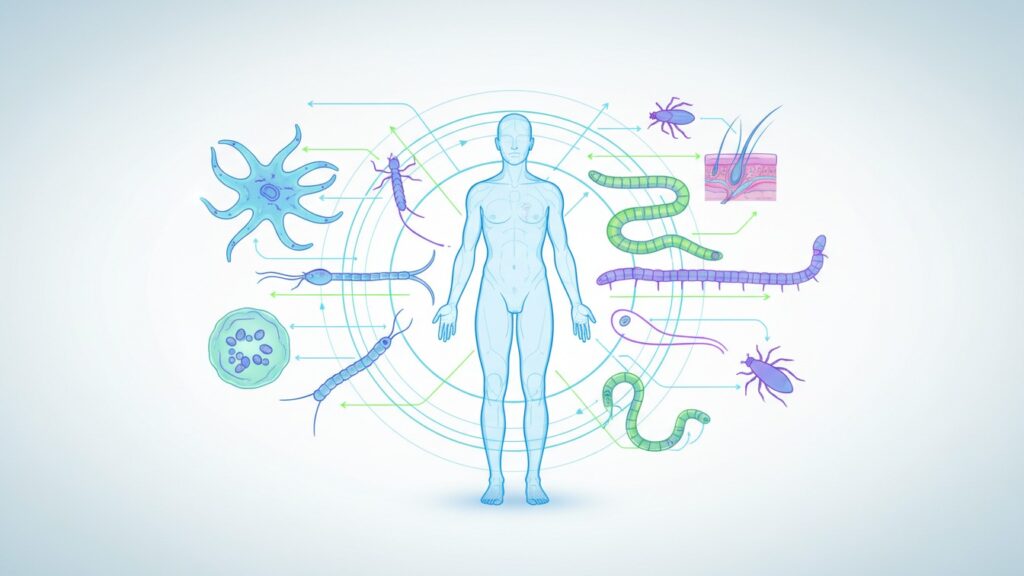
Parasitology is the branch of biology that studies parasites, their structure, life cycles, the diseases they cause, and methods of treatment. This field plays a crucial role in medicine, veterinary science, public health, and environmental studies, especially in regions where parasitic infections continue to affect millions.
In this parasitology complete guide, you will learn:
- What are parasites?
- Types of parasites: Protozoa, Helminths, Ectoparasites
- Life cycles of parasites: Direct vs Indirect
- Major parasitic diseases and their symptoms
- Diagnostic methods
- Treatment and prevention strategies
- Emerging trends and research in 2026
1. What is Parasitology?
Parasitology is the scientific study of organisms called parasites that live on or inside other organisms (hosts) and derive nutrients at their expense, often causing harm.
Definition of a Parasite
- A parasite is an organism that lives on or inside a host to obtain nutrients.
- The host is harmed in the process, which can result in disease, weakness, or death.
Key Groups Studied in Parasitology
- Protozoa: Single-celled microorganisms
- Helminths: Multicellular worms
- Ectoparasites: Parasites living on the surface of the host (e.g., lice, ticks)
Types of Hosts
| Host Type | Description | Example |
|---|---|---|
| Definitive host | The host in which the parasite reaches sexual maturity and reproduces | Humans for Plasmodium |
| Intermediate host | Hosts part of the parasite’s development but not for sexual reproduction | Mosquito for Plasmodium |
| Paratenic host | Hosts that transfer the parasite to the next host, not essential for development | Fish transmitting nematodes |
| Accidental host | Hosts in which the parasite accidentally infects and cannot complete its life cycle | Hosts part of the parasite’s development, but not for sexual reproduction |
2. Types of Parasites
Parasites are broadly classified into three main types:
2.1 Protozoa (Single-celled parasites)
- Microscopic unicellular organisms
- Can infect the blood, intestines, liver, brain, etc.

Common Protozoa and Diseases
| Parasite | Disease | Common Symptoms |
|---|---|---|
| Plasmodium spp. | Malaria | Fever, chills, vomiting, fatigue, jaundice |
| Giardia lamblia | Giardiasis | Diarrhea, abdominal pain, gas, weight loss |
| Entamoeba histolytica | Amebiasis | Bloody diarrhea, abdominal pain, liver abscess |
| Toxoplasma gondii | Toxoplasmosis | Fever, headache, pregnancy complications |
| Trypanosoma spp. | Sleeping sickness | Fever, headache, sleep disturbances, neurological symptoms |
2.2 Helminths (Multicellular worms)
- Multicellular organisms living in the intestines, liver, blood, lungs, or skin
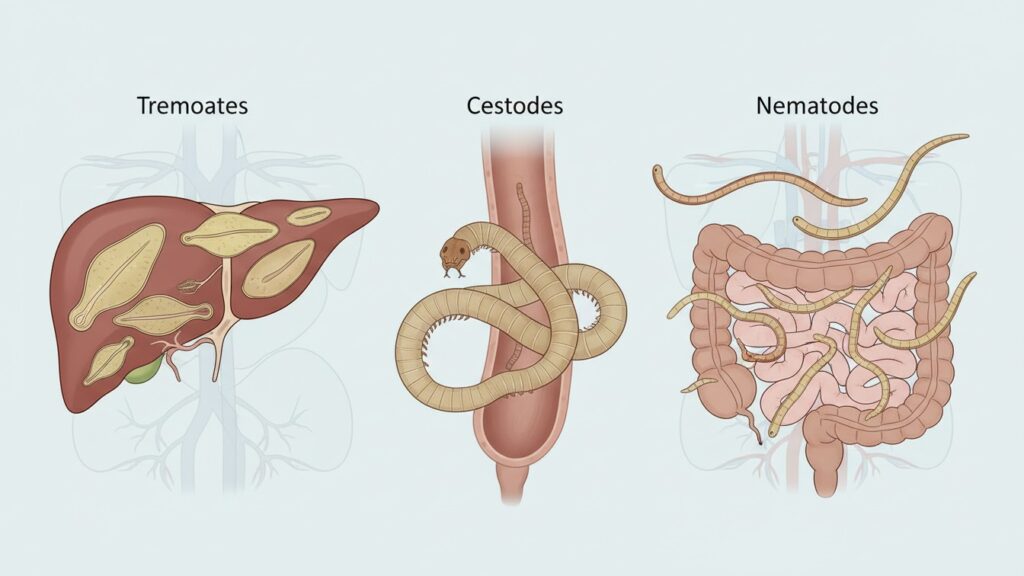
Types of Helminths
| Type | Examples | Disease | Symptoms |
|---|---|---|---|
| Trematodes | Schistosoma spp. | Schistosomiasis | Blood in urine, abdominal pain, liver damage |
| Cestodes | Taenia solium, T. saginata | Tapeworm Infection | Abdominal pain, weight loss, nausea |
| Nematodes | Ascaris lumbricoides, Enterobius vermicularis, Wuchereria bancrofti | Ascariasis, Enterobiasis, Filariasis | Abdominal pain, swelling, reduced appetite |
2.3 Ectoparasites (External parasites)
- Live on skin, hair, or external body surfaces
- Feed on blood or penetrate skin
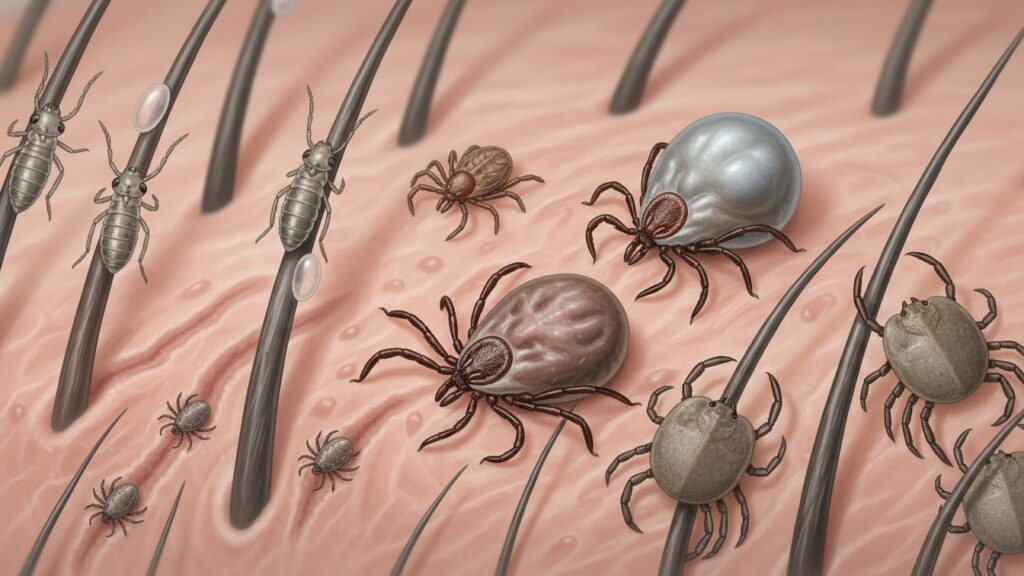
Common Ectoparasites
| Parasite | Disease / Effect | Symptoms |
|---|---|---|
| Sarcoptes scabiei | Scabies | Swelling at the bite site, fever, Lyme disease |
| Pediculus humanus | Lice | Itching, visible lice on scalp/body |
| Ixodes, Rhipicephalus | Ticks | Swelling at bite site, fever, Lyme disease |
| Phthirus pubis | Pubic lice | Intense itching, visible small lice |
3. Life Cycles of Parasites
Understanding a parasite’s life cycle is crucial for controlling transmission, growth, and reproduction.
3.1 Direct (Simple) Life Cycle
- Completed in a single host, usually the definitive host
- The next generation is transmitted directly to another host
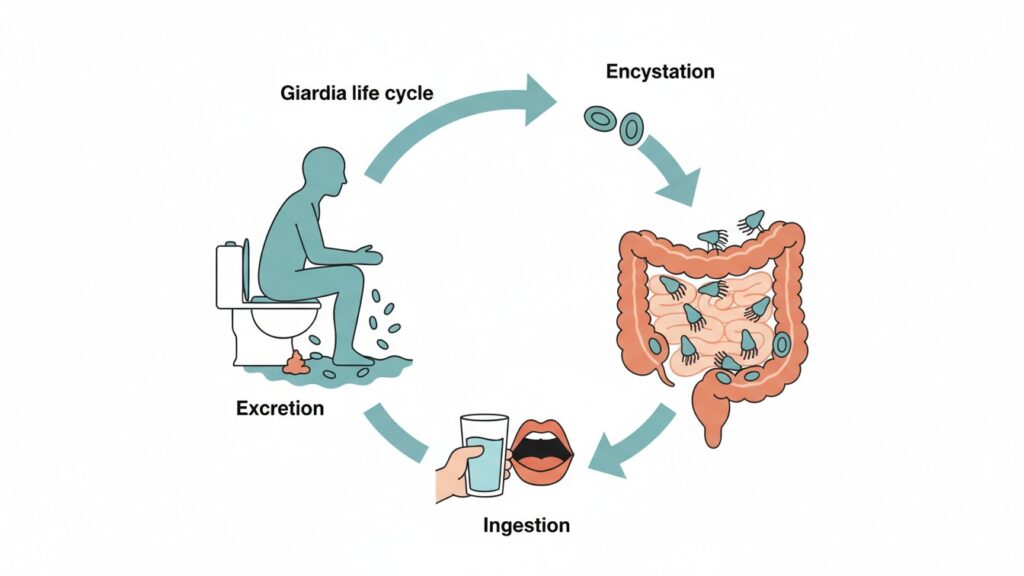
Example: Giardia lamblia
- Cysts are excreted in feces or urine
- Another person ingests contaminated water or food
- Cysts transform into trophozoites in the intestine, causing diarrhea
- New cysts are formed and excreted
3.2 Indirect (Complex) Life Cycle
- Requires two or more hosts
- Includes definitive host and intermediate host(s)
Example: Plasmodium (Malaria)
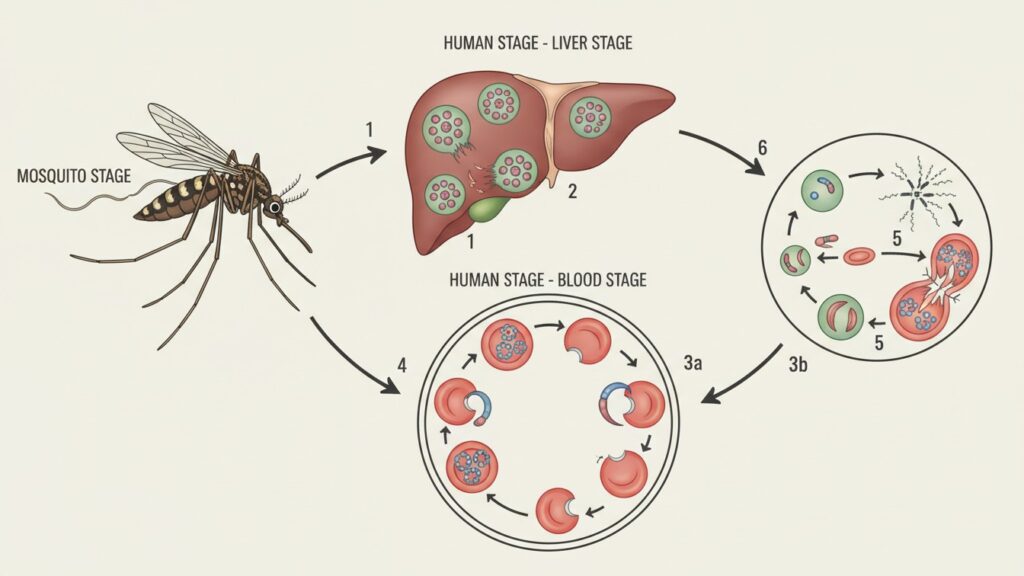
| Step | Host | Process |
|---|---|---|
| 1 | Mosquito (Definitive) | Sporozoites are injected into humans during a bite |
| 2 | Human (Intermediate) | Sporozoites enter liver → schizonts → merozoites enter RBCs → symptoms (fever, chills, nausea) |
| 3 | Mosquito | Ingests gametocytes → gametes → oocyst → sporozoites |
Example: Schistosoma (Schistosomiasis)
- Definitive host: Humans
- Intermediate host: Freshwater snail
- Eggs excreted in urine/feces hatch → miracidia infect snail → cercariae released → penetrate human skin → mature worms → new eggs excreted
4. Major Parasitic Diseases and Symptoms
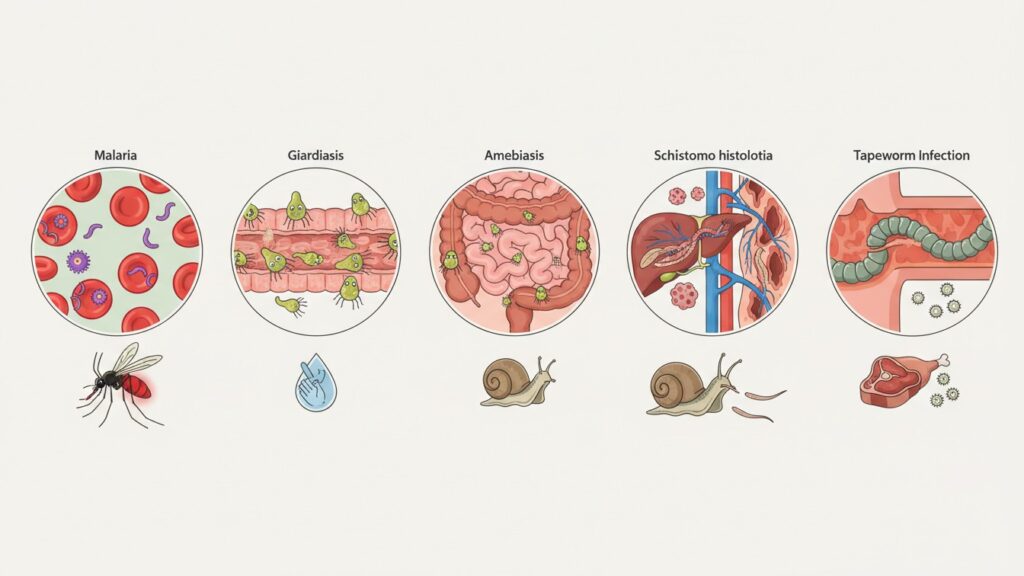
4.1 Malaria
- Causative agent: Plasmodium spp.
- Vector: Anopheles mosquito
- Symptoms: Fever, chills, vomiting, fatigue, jaundice; severe cases may include coma or death (P. falciparum)
4.2 Giardiasis
- Causative agent: Giardia lamblia
- Transmission: Contaminated water, food, or hands
- Symptoms: Diarrhea, abdominal pain, gas, weight loss, nutrient deficiency
4.3 Amebiasis
- Causative agent: Entamoeba histolytica
- Transmission: Contaminated water or food
- Symptoms: Bloody diarrhea, abdominal pain, liver abscess
4.4 Schistosomiasis
- Causative agent: Schistosoma spp.
- Transmission: Contact with contaminated water
- Symptoms: Blood in urine, abdominal pain, chronic liver/bladder disease
4.5 Tapeworm Infection
- Causative agent: Taenia solium, T. saginata
- Transmission: Eating undercooked meat
- Symptoms: Abdominal pain, reduced appetite, weight loss, nausea
5. Diagnosis of Parasitic Infections
- Microscopic examination (stool, blood, urine)
- Serological tests (ELISA, rapid diagnostic tests)
- Molecular methods (PCR, DNA sequencing)
- Imaging techniques (ultrasound, MRI for tissue parasites)
6. Treatment and Prevention
Treatment
- Antiparasitic drugs (e.g., chloroquine, metronidazole, praziquantel)
- Supportive care (hydration, nutrition)
- Surgery (for large cysts or worm infestations)
Prevention
- Safe drinking water and sanitation
- Personal hygiene
- Vector control (e.g., mosquito nets)
- Proper cooking of meat
- Public health awareness campaigns
Conclusion
Parasitology remains a vital field of science that bridges medicine, veterinary science, and public health. Understanding parasites’ life cycles, transmission, and pathology is essential for diagnosis, treatment, and prevention. Emerging technologies and research in 2026 promise more accurate detection, safer treatments, and effective parasite control, improving global health outcomes.
Frequently Asked Questions (FAQs)
1. What is Parasitology, and why is it studied?
Parasitology is the branch of biology that studies parasites, their life cycles, hosts, and the diseases they cause. Its primary goal is to identify, prevent, and develop appropriate treatments for parasitic diseases.
2. How many types of parasites are there?
There are mainly three types of parasites:
- Protozoa – such as malaria parasites
- Helminths (worms) – such as roundworm, tapeworm
- Ectoparasites – such as lice, fleas, and ticks
– All affect human health in different ways.
3. What is the life cycle of a parasite?
A parasite’s life cycle is the process by which a parasite passes through egg, larval, and adult stages. Some parasites complete their life cycle on a single host, while others require multiple hosts.
4. What diseases are caused by parasites?
Parasites can cause several serious diseases, such as:
- Malaria
- Amoebiasis
- Filariasis
- tapeworm infection
- Scabies:
If not treated on time, this disease can even be fatal.
5. What are the common symptoms of parasitic infection?
Common symptoms of a parasitic infection include abdominal pain, diarrhea, weight loss, weakness, itching, anemia, and fever. Symptoms depend on the type of parasite and the severity of the infection.
6. How are parasitic diseases diagnosed?
Stool tests, blood tests, microscopic examinations, and sometimes imaging techniques are used to diagnose parasitic diseases. An accurate diagnosis is crucial for treatment.
7. What is the treatment of parasitic infection?
Parasitic infections are treated with specific antiparasitic drugs. The choice of medication depends on the type of parasite, the stage of the disease, and the patient’s condition. It’s unsafe to take medication without consulting a doctor.
8. How can parasites be prevented?
Cleanliness, drinking pure water, avoiding undercooked food, handwashing, and mosquito control are very effective ways to prevent parasites. Prevention is the best way to avoid parasitic diseases.
9. What is the importance of Parasitology in the medical field?
Parasitology is of immense importance in the medical field because it helps doctors accurately diagnose infections and develop effective treatments. It also plays a vital role in public health and tropical medicine.
