
Introduction to Microbial Genetics
Microbial Genetics is a specialized branch of genetics that focuses on the genetic material of microorganisms, including bacteria, viruses, fungi, archaea, and protozoa. It explores how microbial genes are structured, expressed, regulated, mutated, and transferred, and how these processes are applied in medicine, biotechnology, agriculture, and environmental science.
Because microorganisms grow rapidly, have compact genomes, and are easily manipulated experimentally, they serve as ideal model systems for understanding fundamental genetic principles.
What You Will Learn in This Guide
This microbial genetics complete guide covers:
- Structure and organization of microbial genomes
- Mechanisms of gene expression and regulation
- Types, causes, and effects of mutations
- Horizontal gene transfer in microbes
- Modern tools such as CRISPR and Next-Generation Sequencing
- Medical, industrial, and environmental applications
- Future trends and research opportunities in microbial genetics
1. What Is Microbial Genetics?
Microbial Genetics is the study of DNA or RNA in microorganisms, including how genetic information is stored, replicated, expressed, altered, and inherited.
Microorganisms Studied in Microbial Genetics
- Bacteria: Escherichia coli, Bacillus, Streptococcus
- Viruses: Bacteriophages, RNA viruses, DNA viruses
- Fungi: Saccharomyces cerevisiae, Aspergillus
- Archaea: Extremophiles (thermophiles, halophiles)
- Protozoa & other microbes
Why Is Microbial Genetics Important?
- Microbes have simple and compact genomes
- They reproduce quickly, enabling rapid experiments
- They help explain core concepts like gene regulation and mutation
- They form the foundation of antibiotics, vaccines, genetic engineering, and biotechnology
2. Structure of Microbial Genomes
The microbial genome refers to the complete genetic content of a microorganism. Genome structure varies significantly among bacteria, viruses, fungi, and archaea.

2.1 Bacterial Genome Structure
Key features of bacterial genomes include:
- Chromosome:
- Usually, a single, circular DNA molecule
- Contains essential genes for survival
- Plasmids:
- Small, circular, extra-chromosomal DNA
- Carry non-essential but beneficial genes (e.g., antibiotic resistance)
- Genome Size:
- Typically ranges from 0.5 to 10 million base pairs (Mbp)
Examples of Bacterial Genomes
| Organism | Genome Size | Approx. Genes |
|---|---|---|
| E. coli | ~4.6 Mbp | ~4,300 |
| Mycoplasma genitalium | ~0.58 Mbp | ~500 |
2.2 Viral Genome Structure
Viral genomes are highly diverse:
- Genetic material can be DNA or RNA
- May be single-stranded (ss) or double-stranded (ds)
- Structure can be linear or circular
Examples
| Virus | Genome Type | Structure |
|---|---|---|
| T4 bacteriophage | dsDNA | Linear |
| HIV | ssRNA | Linear |
| Hepatitis B virus | dsDNA | Circular |
2.3 Fungal and Archaeal Genomes
- Fungi:
- Have linear chromosomes
- Example: Saccharomyces cerevisiae has 16 chromosomes
- Archaea:
- Genome structure similar to bacteria
- Gene regulation mechanisms resemble eukaryotes
3. Gene Expression in Microorganisms
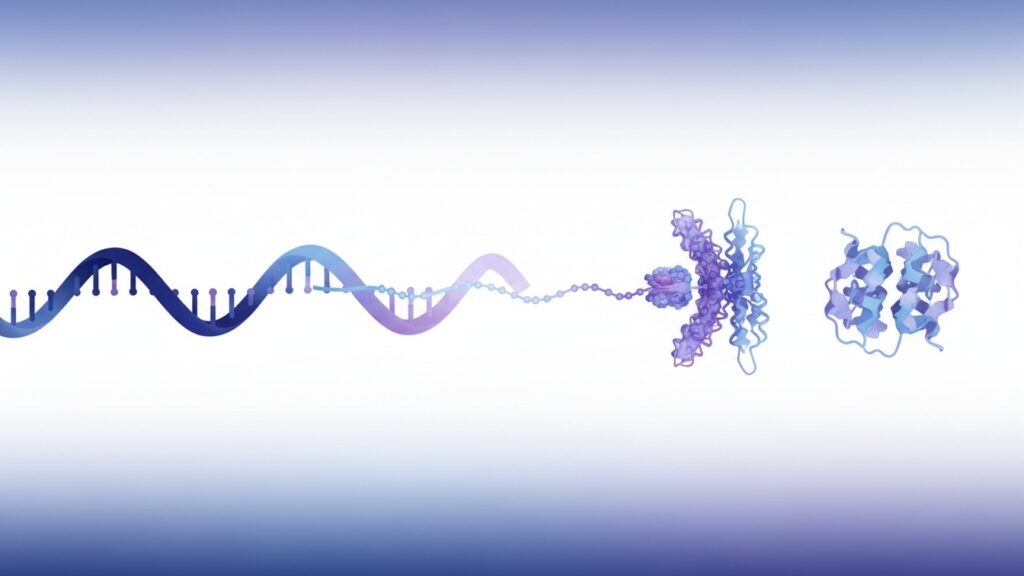
Gene expression is the process by which genetic information is converted into functional proteins.
3.1 Central Dogma of Molecular Biology
- Transcription: DNA → mRNA
- Translation: mRNA → Protein
3.2 Transcription in Microbes
- Performed by RNA polymerase
- Bacteria usually have one RNA polymerase enzyme
- mRNA is often polycistronic, meaning one mRNA can encode multiple proteins
3.3 Translation in Microbes
- Occurs on ribosomes
- tRNA molecules deliver amino acids
- The start codon is usually AUG (Methionine)
4. Gene Regulation in Microorganisms
Microbes tightly regulate gene expression to conserve energy and adapt quickly to environmental changes.

4.1 Operon Model
The operon is a group of genes regulated together.
Lac Operon (E. coli)
- Controls lactose metabolism
- Lactose present → operon ON
- Lactose absent → operon OFF
Other important operons include:
- trp operon (tryptophan synthesis)
- ara operon (arabinose metabolism)
4.2 Other Regulatory Mechanisms
- Two-Component Systems
- Sense environmental signals (pH, osmotic stress)
- Quorum Sensing
- Chemical communication between bacterial cells
- cAMP-CRP Complex
- Enhances or suppresses transcription depending on glucose availability
5. Mutations in Microorganisms
A mutation is a permanent change in DNA sequence that can alter protein structure or gene function.
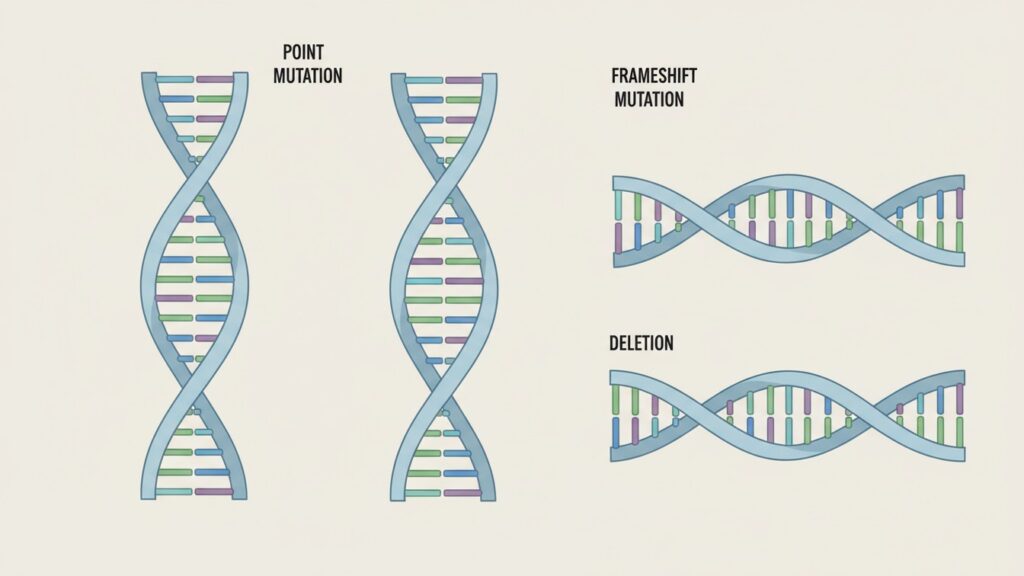
5.1 Types of Mutations
| Mutation Type | Description | Effect |
|---|---|---|
| Point mutation | Single base change | Minor or major |
| Frameshift | Insertion or deletion | Alters reading frame |
| Silent mutation | Codon changes, same amino acid | No effect |
| Missense mutation | Different amino acid | Altered protein |
| Nonsense mutation | Stop codon formed | Truncated protein |
5.2 Causes of Mutations
- Spontaneous mutations: DNA replication errors
- Mutagens:
- Chemical: Nitrous acid, Ethidium bromide
- Physical: UV light, X-rays
- Biological: Transposons, insertion sequences
5.3 Mutation Analysis Techniques
- Ames Test: Detects chemical mutagens
- DNA Sequencing (NGS): Identifies exact mutation sites
6. Gene Transfer in Microorganisms
Microbes exchange genes through Horizontal Gene Transfer (HGT), enabling rapid evolution.
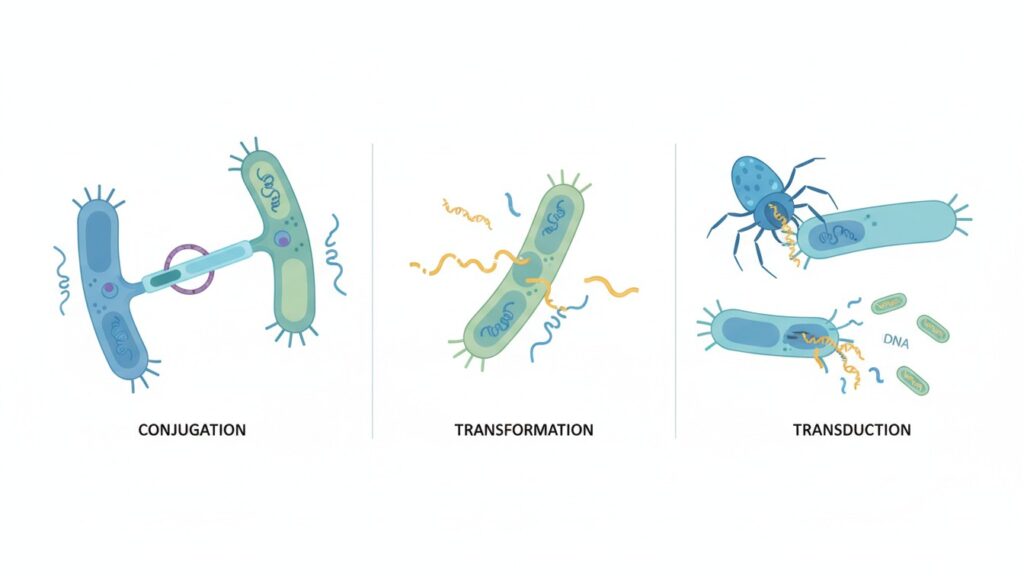
6.1 Conjugation
- Direct DNA transfer between bacteria
- Requires F-plasmid
- The major cause of the spread of antibiotic resistance is
6.2 Transformation
- Uptake of naked DNA from the environment
- Demonstrated by Griffith’s experiment
6.3 Transduction
- DNA transfer via bacteriophages
- Can be generalized or specialized
7. Modern Technologies in Microbial Genetics

7.1 CRISPR-Cas Systems
- Powerful gene-editing technology
- Used for:
- Gene deletion or insertion
- Vaccine development
- Antibiotic resistance research
7.2 Next-Generation Sequencing (NGS)
- Rapid, cost-effective genome sequencing
- Used in:
- Epidemiology
- Metagenomics
- Discovery of novel genes
7.3 Metagenomics
- Sequencing DNA directly from environments
- No culturing required
- Applications:
- Gut microbiome studies
- Soil and marine microbiology
7.4 Transcriptomics & Proteomics
- Transcriptomics: Analysis of all RNA molecules
- Proteomics: Study of complete protein profiles
Conclusion
Microbial Genetics is a cornerstone of modern biological science. From understanding basic gene function to developing life-saving medicines and advanced biotechnologies, this field continues to shape the future of science, health, and industry.
As tools like CRISPR, NGS, and metagenomics evolve, microbial genetics will remain at the heart of innovation, discovery, and global problem-solving.
Frequently Asked Questions (FAQs)
1. What is microbial genetics in simple terms?
Microbial genetics is the study of how genes in microorganisms such as bacteria, viruses, fungi, and archaea are structured, expressed, regulated, and passed from one generation to another. It helps scientists understand how microbes function, evolve, and adapt to different environments.
2. Why is microbial genetics important in modern science?
Microbial genetics is essential because it forms the foundation of biotechnology, medicine, and molecular biology. It plays a key role in developing antibiotics, vaccines, genetic engineering tools, and industrial enzymes, as well as in understanding antibiotic resistance and infectious diseases.
3. How is microbial genetics different from human genetics?
Microbial genetics focuses on organisms with small, fast-replicating genomes, while human genetics studies complex, slow-growing organisms. Microbes often exchange genes horizontally, making genetic changes occur much faster than in humans.
4. What is gene regulation in microorganisms?
Gene regulation in microorganisms is the process by which microbes turn genes on or off in response to environmental conditions. This allows them to conserve energy and quickly adapt to changes such as nutrient availability, temperature, or stress.
5. What are mutations in microbial genetics?
Mutations are permanent changes in the DNA sequence of microorganisms. They can occur naturally during DNA replication or be caused by mutagens such as chemicals or radiation. Mutations may be harmless, beneficial, or harmful, depending on their effect on protein function.
6. How do microorganisms transfer genes to each other?
Microorganisms transfer genes through horizontal gene transfer methods such as conjugation, transformation, and transduction. These processes allow microbes to rapidly acquire new traits, including antibiotic resistance and metabolic abilities.
7. What role does microbial genetics play in antibiotic resistance?
Microbial genetics explains how bacteria develop and spread antibiotic resistance through mutations and gene transfer. Understanding these genetic mechanisms helps scientists design better antibiotics and strategies to control resistant infections.
8. What is CRISPR, and how is it used in microbial genetics?
CRISPR is a powerful gene-editing technology originally discovered in bacteria. In microbial genetics, it is used to precisely modify genes, study gene function, develop vaccines, and engineer microbial strains for medical and industrial applications.
9. How is microbial genetics used in biotechnology and industry?
Microbial genetics is used to engineer microbes that produce insulin, enzymes, biofuels, antibiotics, and fermented foods. It also supports environmental applications such as waste treatment and pollution cleanup.
10. What are the future applications of microbial genetics?
Future applications include personalized medicine, advanced vaccines, synthetic biology, microbiome-based therapies, and sustainable industrial processes. With technologies like AI and genome sequencing, microbial genetics will continue to drive scientific innovation.
