
What is E. coli?
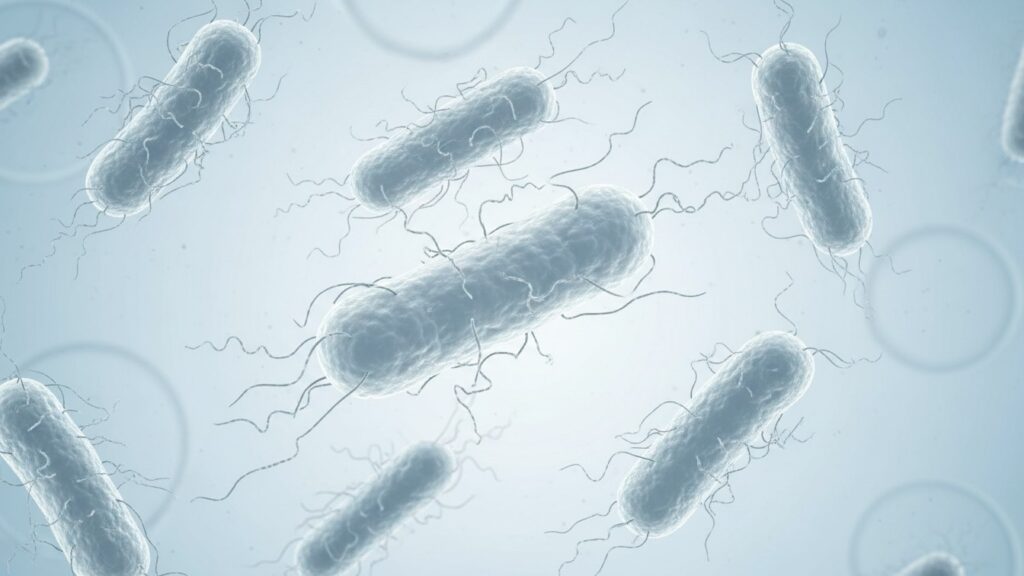
E. coli (Escherichia coli) is a Gram-negative bacterium commonly found in the intestines of humans and animals.
- Most E. coli strains are harmless and play an important role in:
- Producing vitamin K
- Preventing the growth of harmful bacteria
- However, some strains of E. coli infection (such as E. coli O157:H7) can cause:
- Severe food poisoning
- Bloody diarrhea
- Urinary tract infections (UTIs)
- Life-threatening complications like Hemolytic Uremic Syndrome (HUS)
Types of E. coli
There are hundreds of E. coli strains, broadly classified into two main groups:
1. Commensal (Harmless) E. coli
- Normal residents of the gut
- Support digestion and immune balance
- Help synthesize vitamin K
2. Pathogenic (Harmful) E. coli
These strains are known as pathotypes and are divided into two categories:
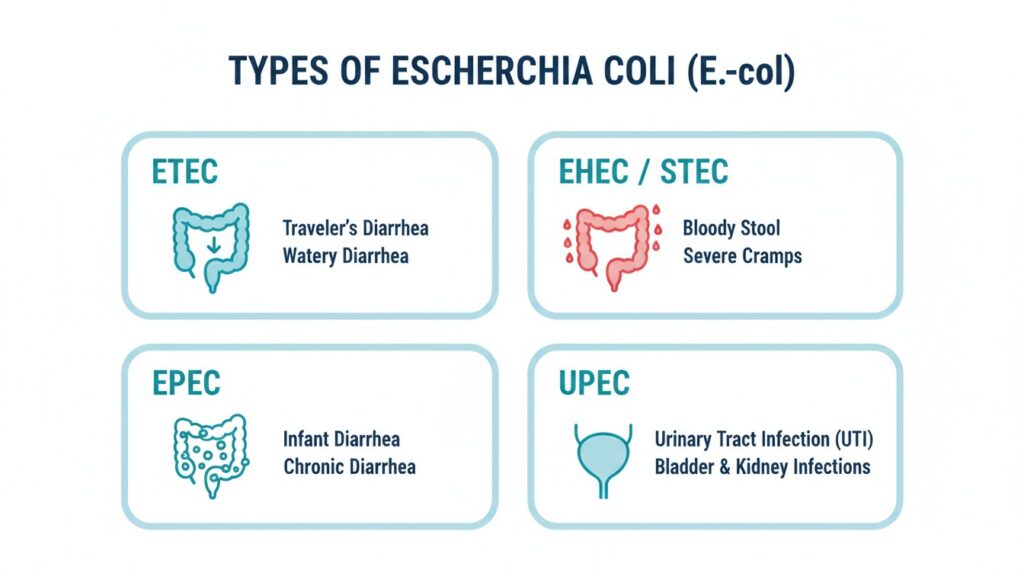
A. Diarrheagenic E. coli (Intestinal Infections)
| Type | Full Name | Key Features |
|---|---|---|
| ETEC | Enterotoxigenic E. coli | Severe diarrhea in infants is common in developing countries |
| EPEC | Enteropathogenic E. coli | Persistent diarrhea is common in children and HIV patients |
| EHEC / STEC | Shiga toxin-producing E. coli (e.g., O157:H7) | Bloody diarrhea, severe abdominal pain, risk of HUS |
| EIEC | Enteroinvasive E. coli | Similar to Shigella, causes intestinal inflammation |
| EAEC | Enteroaggregative E. coli | Persistent diarrhea, common in children and HIV patients |
B. Extraintestinal E. coli (Outside the Gut)
| Type | Infection Caused |
|---|---|
| UPEC | Urinary tract infections (UTIs) – most common cause |
| Neonatal E. coli | Meningitis in newborns |
| Sepsis / Bacteremia | Bloodstream infection leading to sepsis |
Causes of E. coli Infection
Harmful E. coli usually enters the body through the oral route.
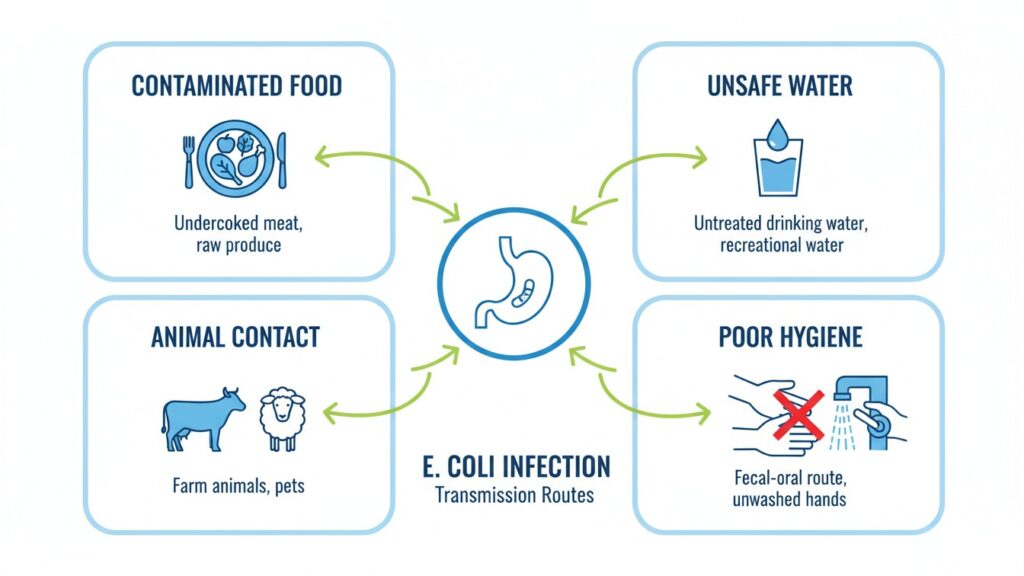
1. Contaminated Food
- Undercooked beef or burgers
- Raw or poorly washed vegetables
- Fruits washed with contaminated water
2. Contaminated Water
- Untreated or polluted drinking water
- Lakes, ponds, or swimming pools contaminated with fecal matter
3. Animal Contact
- Farms, petting zoos, livestock handling
- Surfaces contaminated with animal feces
4. Person-to-Person Spread
- Poor hand hygiene
- Contaminated equipment in hospitals or nursing homes
Symptoms of E. coli Infection
Symptoms vary depending on the strain, age, and immune status.
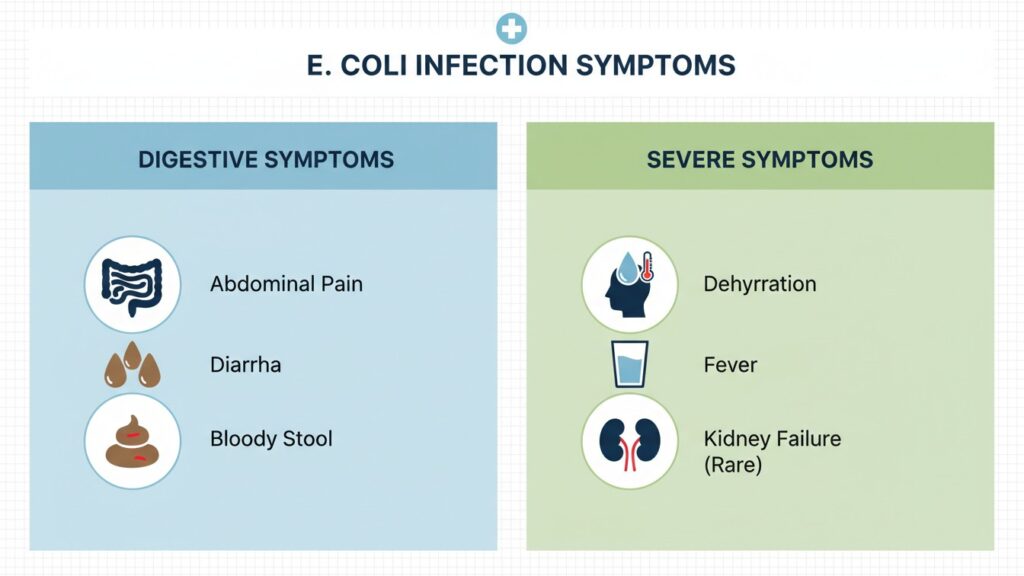
Common Gastrointestinal Symptoms
- Severe abdominal cramps
- Diarrhea (watery to bloody)
- Nausea and vomiting
- Mild to moderate fever
- Fatigue and weakness
Severe Symptoms (EHEC / STEC Infections)
- Bloody diarrhea (hemorrhagic colitis)
- Reduced urine output
- Swelling of face, hands, or feet
- Dizziness, confusion, or fainting
⚠️ These may indicate Hemolytic Uremic Syndrome (HUS), a medical emergency.
UTI Symptoms (UPEC)
- Burning or pain during urination
- Frequent urge to urinate
- Cloudy or bloody urine
- Lower abdominal or back pain
- Fever and chills
Diagnosis of E. coli Infection
Doctors may recommend the following tests:
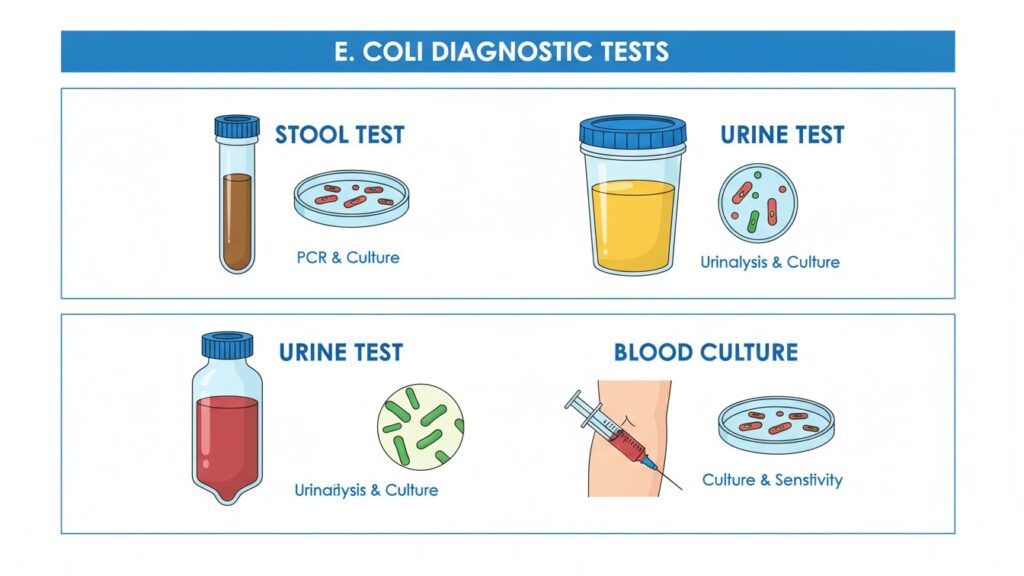
1. Stool Test
- Detects E. coli bacteria
- Identifies Shiga toxin in suspected STEC cases
2. Urinalysis
- Confirms UTI caused by E. coli
3. Blood Culture
- Used if sepsis or bacteremia is suspected
4. Imaging (CT / MRI)
- In severe complications like HUS or meningitis
Treatment of E. coli Infection
Treatment depends on the strain and severity of symptoms.
1. Home Care (Mild Cases)
- Hydration: ORS, electrolyte solutions, clean water
- Light diet: Rice, bread, bananas, yogurt, soup
- Anti-diarrheal drugs: Only with a doctor’s approval
2. Medications
- Antibiotics:
- Usually not required for simple diarrhea
- Used in UTIs (e.g., Nitrofurantoin, Cephalosporins, Fluoroquinolones)
- Avoid antibiotics in EHEC/STEC, as they increase HUS risk
- Fever & pain: Paracetamol (as prescribed)
3. Hospital Treatment (Severe Cases)
| Treatment | Purpose |
|---|---|
| IV fluids | Severe dehydration or HUS |
| Dialysis | Kidney failure in HUS |
| Blood transfusion | Severe anemia or HUS |
Prevention of E. coli Infection
E. coli infections are largely preventable with proper hygiene.
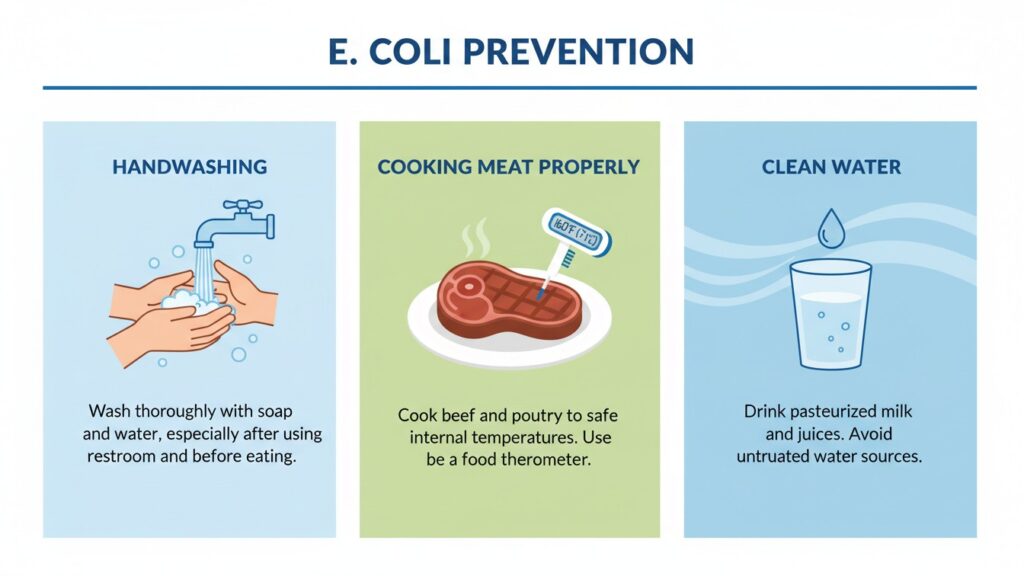
1. Food Safety
- Cook beef to at least 70°C (160°F)
- Avoid cross-contamination
- Wash fruits and vegetables thoroughly
2. Water Safety
- Drink boiled, filtered, or treated water
- Avoid swallowing pool or lake water
3. Personal Hygiene
- Wash hands:
- Before eating
- After using the toilet
- After handling animals
- Teach children proper handwashing
4. Community & Hospital Precautions
- Proper hand hygiene and protective equipment
- Separate utensils and laundry for infected individuals
When to See a Doctor Immediately
Seek medical care if:
- Diarrhea lasts more than 3 days
- Blood appears in the stool
- Severe abdominal pain occurs
- Urine output decreases
- A child, elderly person, or immunocompromised patient develops fever, confusion, or weakness
Frequently Asked Questions (FAQs)
What is E. coli?
E. coli is a bacterium commonly found in the intestines. While most strains are harmless, some can cause serious food poisoning, UTIs, and life-threatening complications.
How long does an E. coli infection last?
- Mild infections: 5–7 days
- STEC/EHEC infections: 10–14 days or longer
Is E. coli contagious?
Yes, it can spread through contaminated food, water, surfaces, and poor hand hygiene.
Conclusion
E. coli infections range from mild digestive upset to severe, life-threatening illness. Understanding the types, symptoms, treatment options, and prevention strategies is essential for protecting yourself and your family. Proper hygiene, safe food handling, and early medical care are the most effective defenses.
Medical Disclaimer
This content is for informational and educational purposes only and is not a substitute for professional medical advice, diagnosis, or treatment. Always consult a qualified healthcare provider for medical concerns or before starting any treatment.
